

What they are, how to trim them, and why everyone suddenly has three headsails up
Staysails have taken over the racing world. Here’s what they are, how to set them up and trim them, what they do to your rating, and why they keep showing up on the boats winning races.
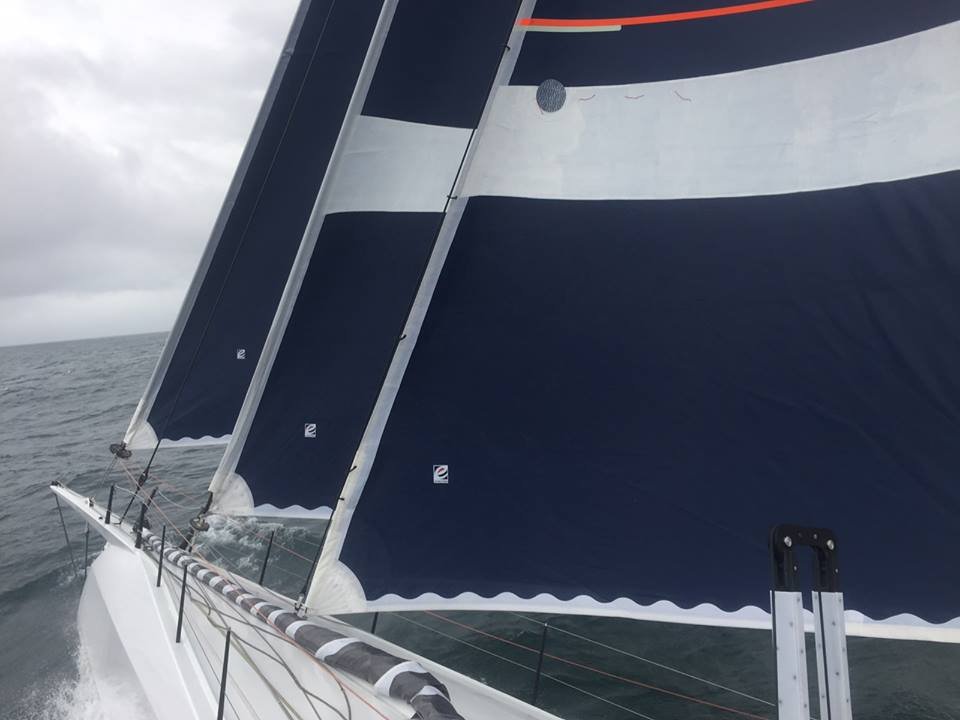
Everywhere you look now, the hot new boats are running triple headed: two staysails plus a spinnaker or code zero, with the foredeck looking like a laundromat exploded. Staysails have quietly taken over the racing world, and they have helped teams find an extra couple tenths of a knot.
Two tenths may not sound like much. It certainly doesn’t sound like enough to justify another sail bag in the forepeak. But average two tenths faster for 10 hours and you are 2 miles in front of the competition. In most fleets, that is the difference between winning and losing.
So what is a staysail, anyway?
A staysail is simply a sail that goes up inside the headstay alongside another headsail: a spinnaker, a jib or genoa, or a code zero. A better name would be a slot sail, since its whole job is to fill the slot between an eased headsail and the main.
There are a few ways to fly one:
- Free flown on a jib halyard or a dedicated staysail halyard
- Hanked or guided on a removable or permanent inner stay
- On a small furler with an anti torsion cable
Staysails let you put up more sail area and pick up a little extra speed. They are not the engine of the boat. Think of them as the turbo button, harnessing the wind that slips between the other sails and squeezing out that last bit of performance.
Not exactly a new idea
Staysails have been around about as long as boats have been harnessing wind. Square riggers hoisted whole rows of jibs for extra performance, and modern race boats were flying staysails long before asymmetrics became commonplace.
The old school staysails were generally light nylon, small by today’s standards, and best known for keeping the crew busy. We used to say they were worth three tenths of a knot: a tenth when you launched it, a tenth when you finally trimmed it right, and another tenth when you took it down. Modern staysails, thankfully, have a much more measurable effect.
The two main flavors
Like most racing sails, staysails go by a dizzying number of names. Every sailmaker worth their salt finds a gap in the inventory, builds a sail to fill it, and gives it a shiny new name. Guilty as charged.
Strip away the marketing, though, and most staysails fall into two categories:
- Spinnaker staysails, flown under a spinnaker for broad reaching and running
- Genoa staysails, flown under a jib or code zero for upwind work and reaching
There is a band of reaching conditions where both earn their keep. Beyond that, you get into the specialized staysails built for very specific jobs.
The spinnaker staysail
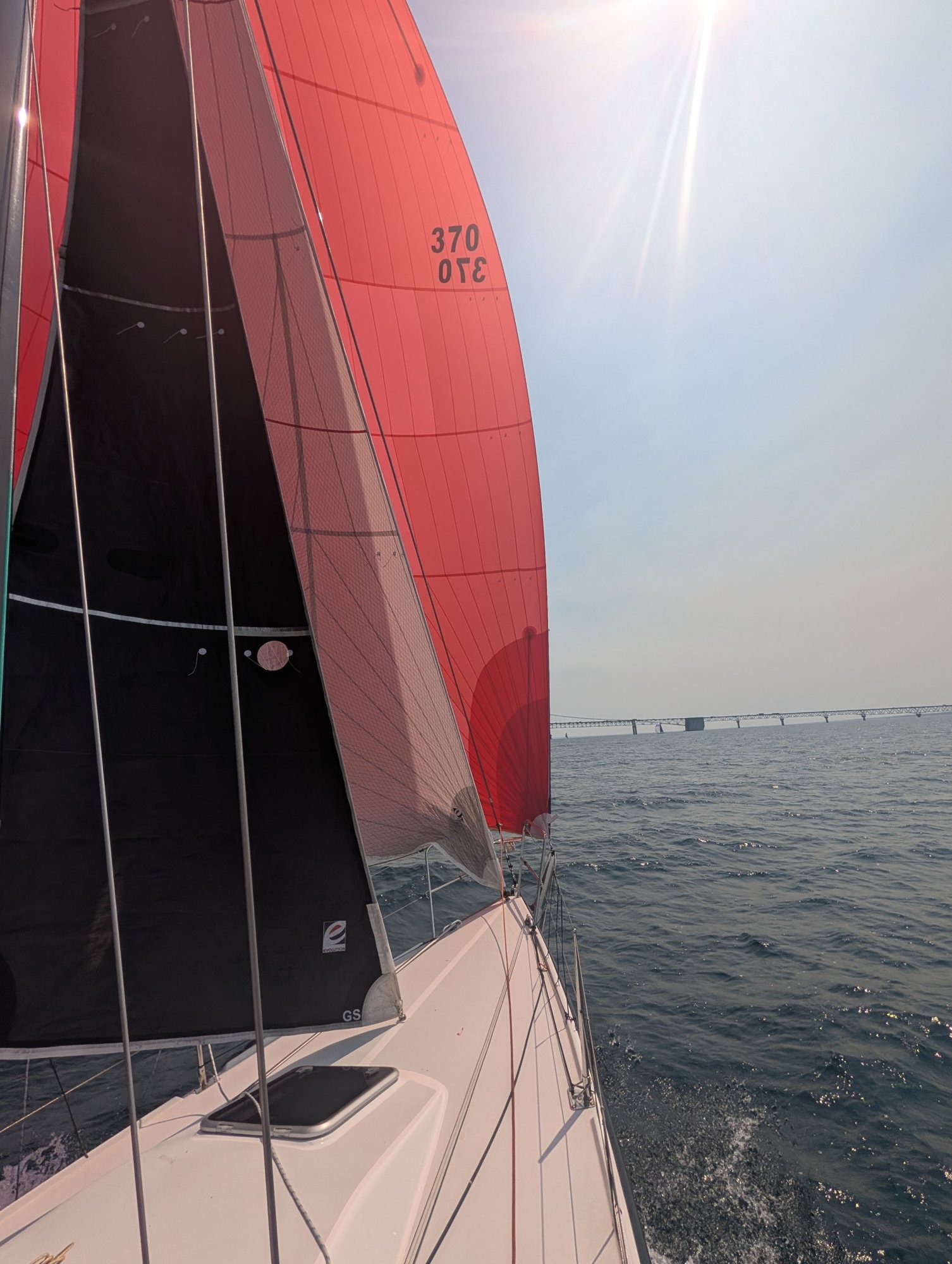
The spinnaker staysail is the most common type. It lives primarily under a running kite like an A2 or S2, but it can also show up under reaching spinnakers or even a code zero.
Setup
This is generally the biggest staysail in the bag, and modern ones are approaching the size of a non overlapping jib. It usually flies from the jib halyard and tacks near the bow on a dedicated padeye. Compared to a traditional jib it has a higher clew, and it sheets near the shrouds or slightly aft, often to its own padeye.
I like to set these up on a small furler like the Karver KF0.9. Hoist it, unfurl it, and roll it back up for maneuvers or when things get squirrelly. We generally build them from code zero materials like Dimension Polyant CZ, EVO 04, or E Tech membrane: light and strong.
Wind range
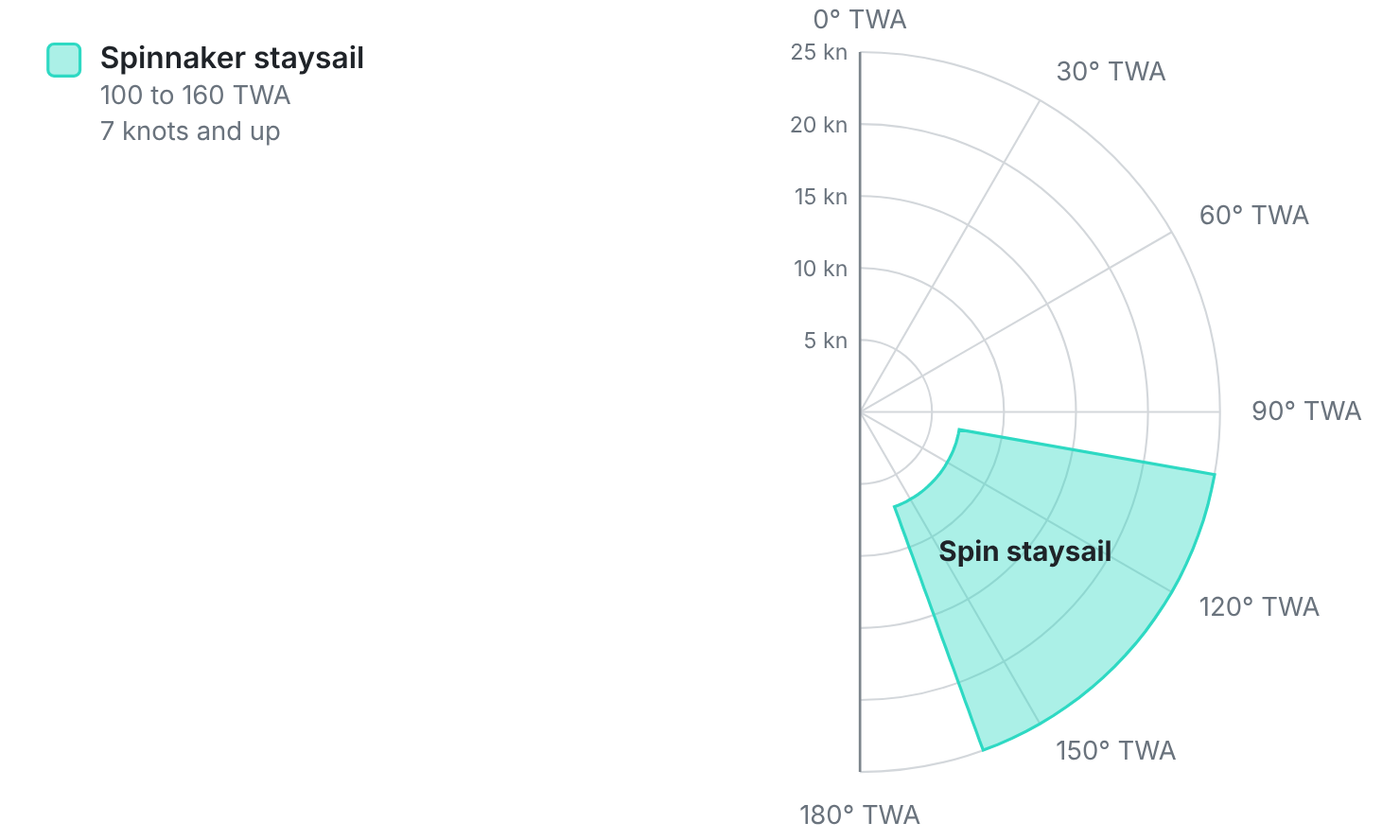
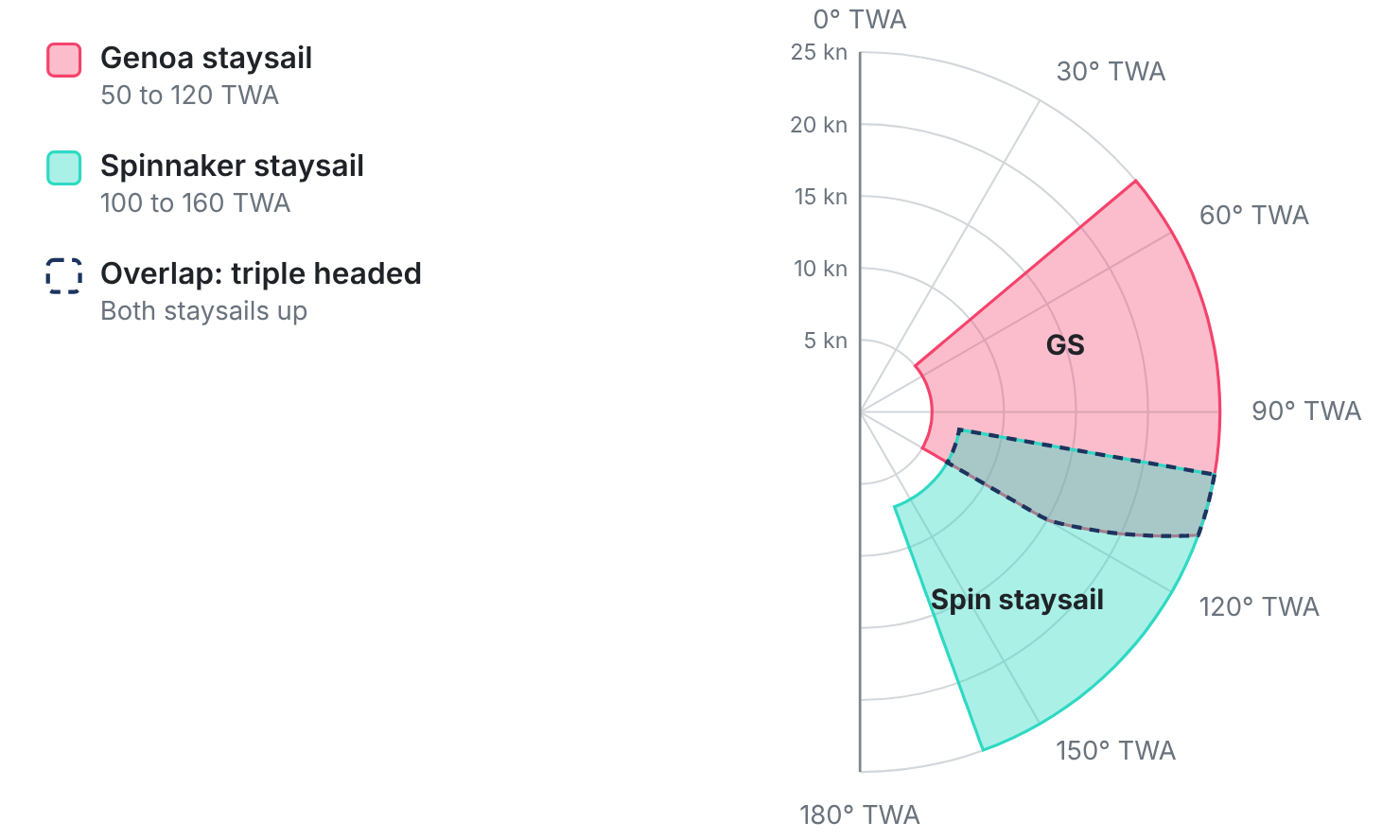
The general rule is anything from 100 to 160 degrees TWA (true wind angle) in more than 7 knots of breeze. That shifts with the boat, the setup, and the conditions. In steady breeze and flat water the bottom end comes down; when things get lumpy and unstable, you need more wind to keep it flying.
If it is too light, the air doesn’t have enough energy to make it past the staysail to the spinnaker, and you have basically given your own kite bad air. This is another reason I like the furler: you can roll it in and out as the breeze comes and goes. Watch a TP52 Super Series race in light air and you will see them furling and unfurling through every puff and lull.
Trimming
Trim it like a normal jib: ease until it luffs, then trim until it just stops. Most have telltales, but at deeper angles, especially on smaller or slower boats, they don’t tell you much.
Always hedge toward under trimmed and over twisted. Overtrim a staysail and it stalls, spinning the breeze off the leech and into the sail outside it. Congratulations, you have manufactured your own dirty air. Expect to tweak the sheet with every change in heading or wind velocity, especially when the boat is heading up and down with the puffs.
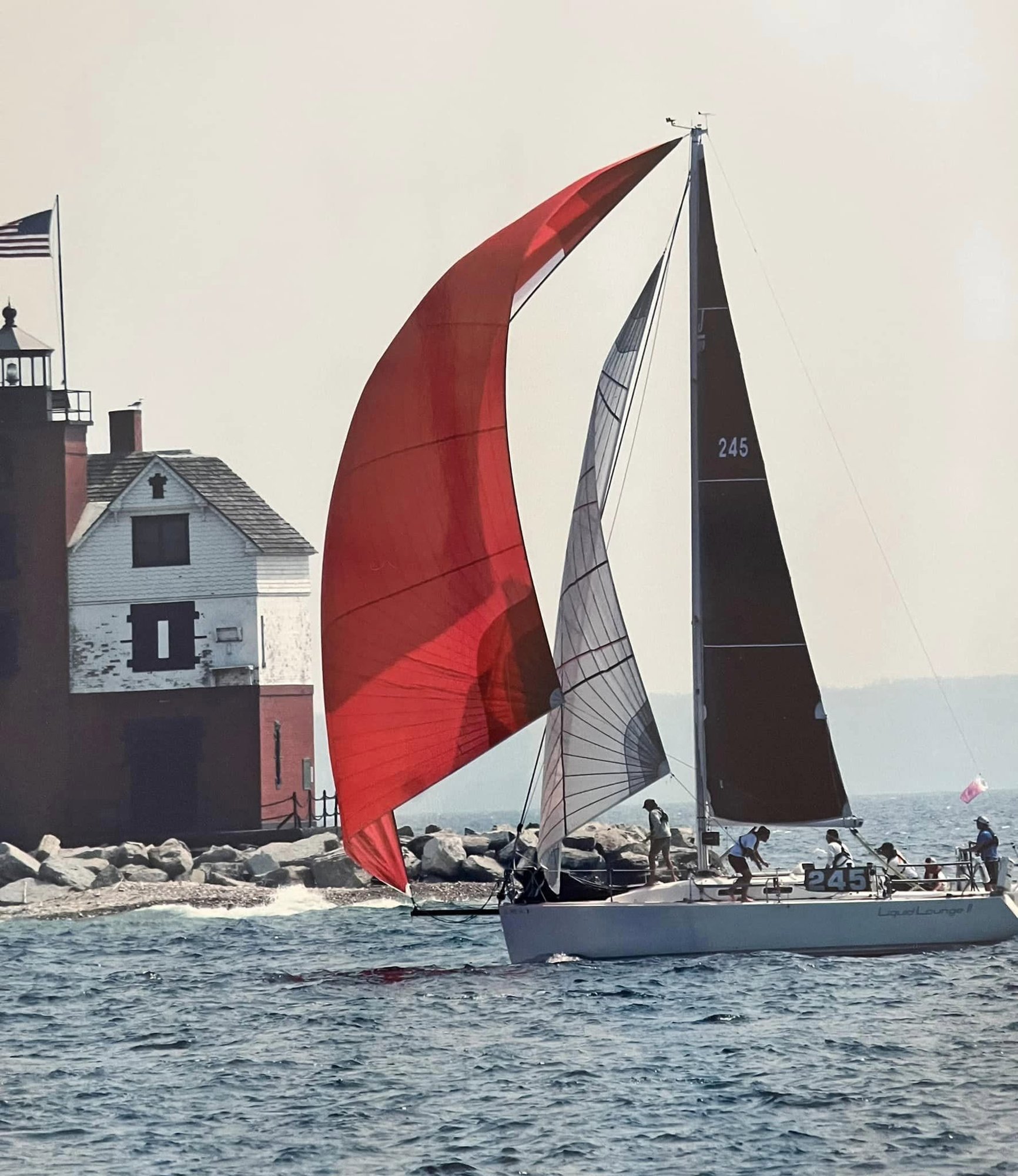
The biggest mistake I see is deploying it too early after a set or gybe. Leave it furled until the boat is fully up to speed and the kite has settled. And be quick to furl it if conditions get unstable and the kite starts collapsing. It’s a slot sail; there needs to be a clean slot with good flow for it to work.
The genoa staysail
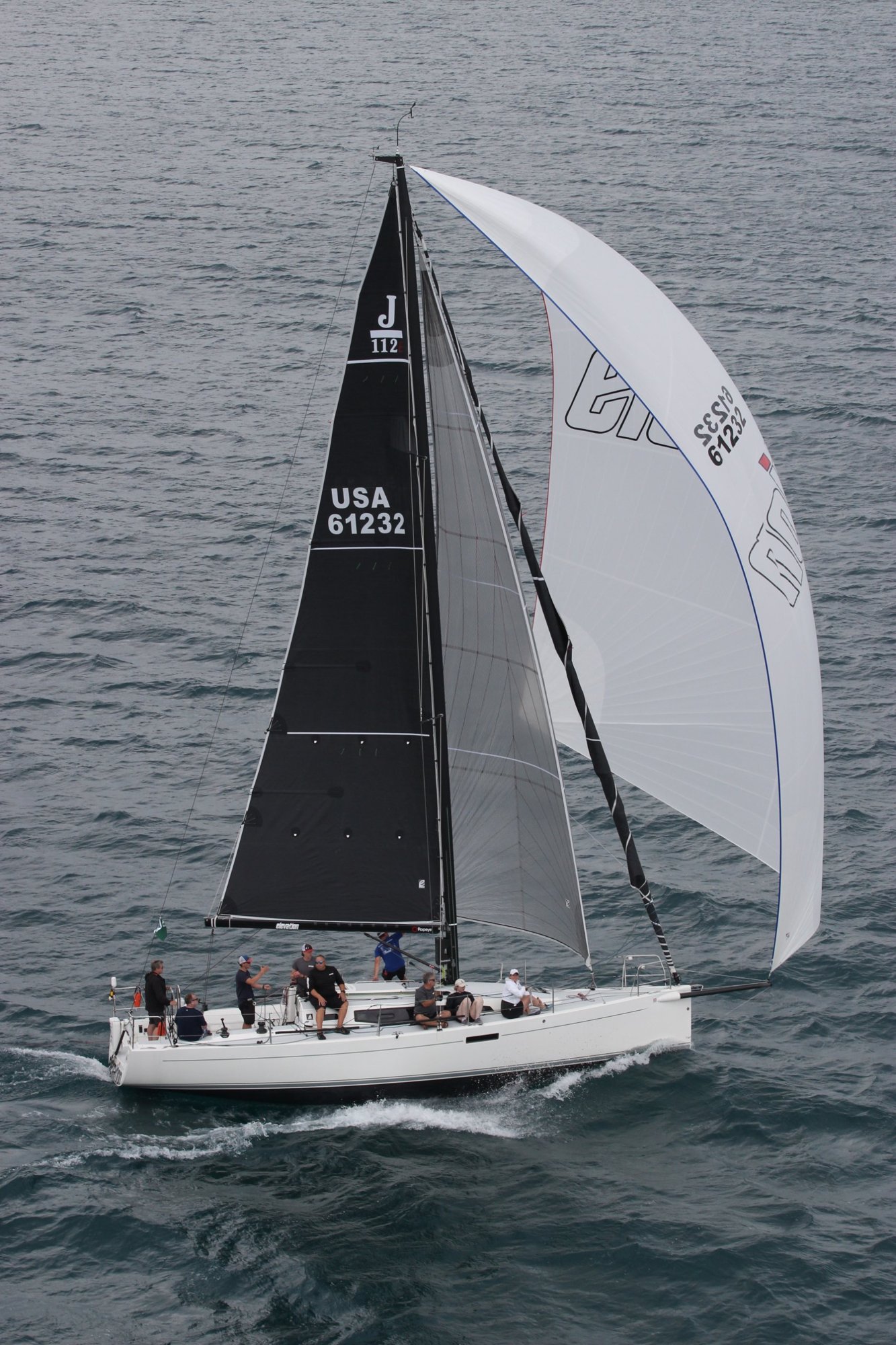
Genoa staysails got their name back when big overlapping genoas ruled the earth, and these sails added area once the genoa sheets were eased. Genoas aren’t nearly as common anymore, but like most things in sailing, the name stuck around long after the reason for it. Today the GS is mostly used under a code zero or jib, and occasionally under a spinnaker in the right conditions.
Setup
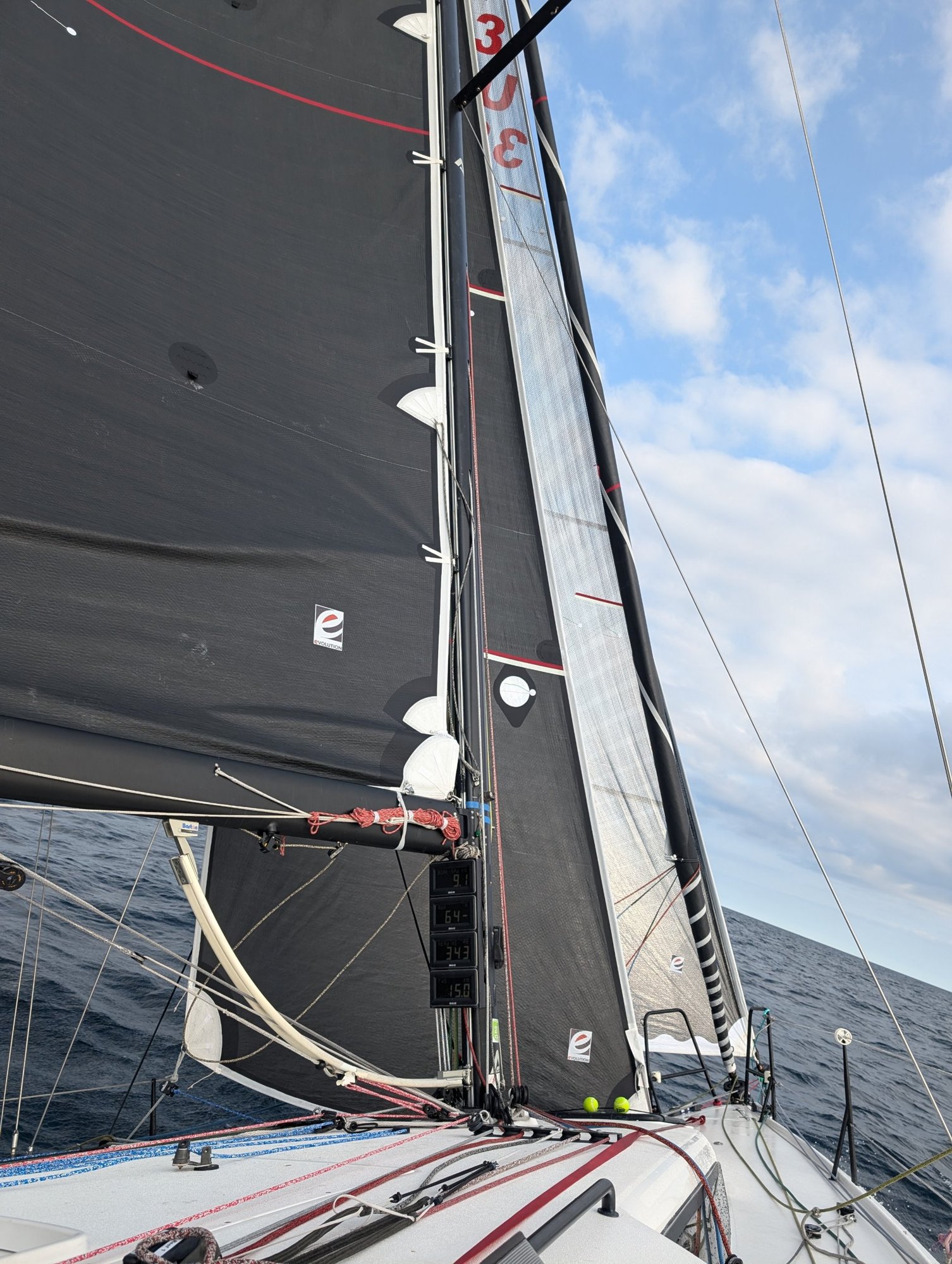
The GS usually flies from a dedicated halyard lower than the jib halyard, typically at the top set of spreaders so the mast can support it. The tack sits further aft than a spinnaker staysail, generally a third to halfway from the mast to the bow. It trims inboard like a jib, using the jib tracks or a dedicated inboard lead.
There is more variety in how these attach to the boat. On smaller boats we tend to free fly them so we can add battens like a jib. That means either a Dyneema stay up the luff or a small removable stay to keep the sail under control during the hoist. On bigger boats we go back to a furler for safer boat handling.
Wind range
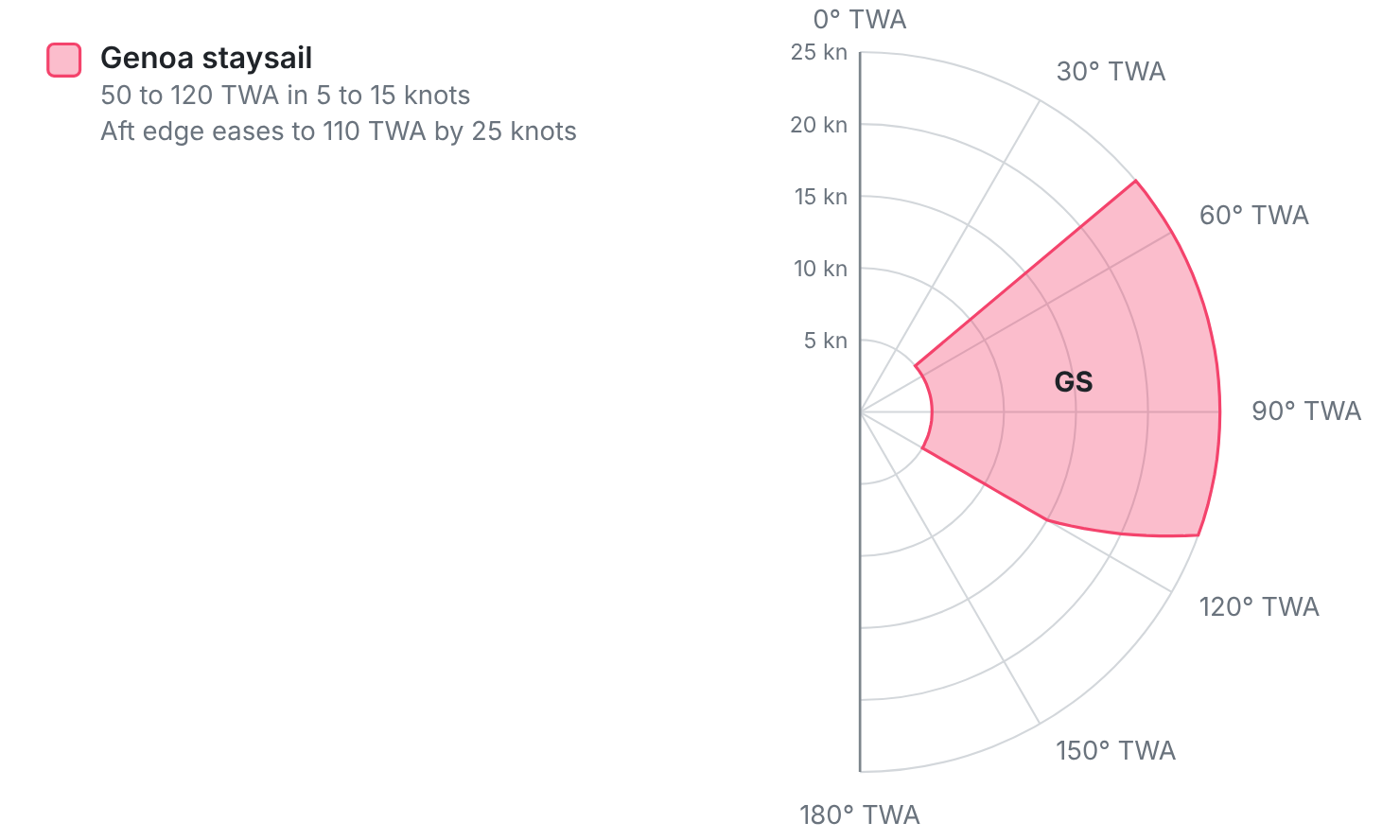
Roughly 32 to 35 degrees AWA (apparent wind angle) down to about 95 AWA, in 5 knots and up. In true wind terms, that works out to roughly 50 to 120 TWA in 5 to 15 knots, with the aft end gradually coming forward to about 110 TWA as the breeze builds. My rule of thumb: if the headsail sheets are eased outside the lifelines on an outside lead, and the apparent is at the beam or forward, it’s GS time.
We will sometimes pull one out in light air under a spinnaker, when the spinnaker staysail is too big and would choke the kite but we are sailing higher apparent angles to keep the boat moving. That little extra push in the light can make a big difference.

Trimming
This one is more straightforward: trim it like a jib and fly the telltales. Because these sails tend to be small and high aspect, they are very sensitive to twist. Like the spinnaker staysail, err on the side of over eased and over twisted, though you don’t need to exaggerate it quite as much.
Side by side
For those who skipped straight to the cheat sheet, here’s how the two stack up.
| Spinnaker staysail | Genoa staysail | |
|---|---|---|
| Flown under | A2 or S2, sometimes a reaching kite or code zero | Code zero or jib, sometimes a kite in light air |
| Halyard | Jib halyard | Dedicated halyard, usually at the top spreaders |
| Tack point | Near the bow on a dedicated padeye | A third to halfway from mast to bow |
| Sheet lead | Near the shrouds or slightly aft | Inboard, on the jib tracks or a dedicated lead |
| Wind angle | 100 to 160 degrees TWA | 50 to 120 TWA (32 to 35 AWA down to about 95 AWA) |
| Wind speed | 7 knots and up | 5 knots and up |
| Typical setup | Small furler with anti torsion cable | Free flown with battens on smaller boats, furler on bigger boats |
| Trim | Under trimmed and over twisted | Like a jib, slightly eased and twisted |
Going triple headed
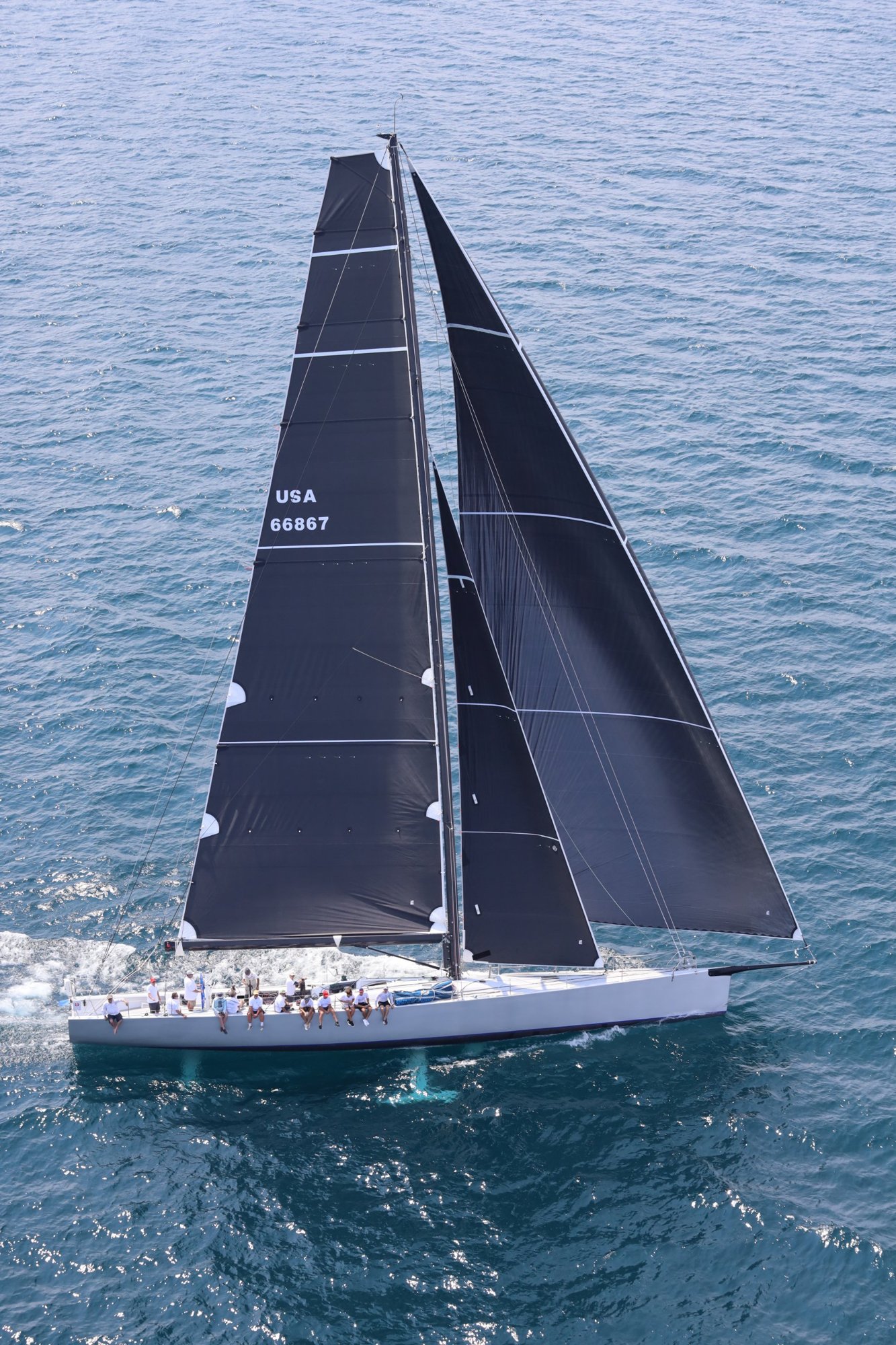
This is the stuff that makes the magazine covers: a hot race boat with every scrap of cloth up, the bow planing five feet out of the water, and the transom looking like a waterfall. It also makes the foredeck crew question their life choices.
Not every race sees all three sails up at once, but there are plenty of conditions, generally at or near a beam reach, where both staysails work together. This is also where the more specialized sails, with names like inner genoa staysail, come out to play.
My advice is to experiment. Set one staysail and sail for five minutes watching the speed. Add the second and do it again. Take good notes and build a sail chart as you figure out what your boat and your sails actually like, rather than what looked cool in the magazine.
But what will it do to my rating?
Usually nothing. Under most handicap rules, staysails don’t affect your rating as long as they meet the rules, which generally means being smaller than your largest headsail. ORC adds one more requirement: the staysail’s LP must be less than 110% of J.
While you’re flipping through the ORC rulebook, you may notice that roughly half of it seems to be about mizzen staysails. This despite the fact that only a handful of boats on the planet can actually carry one. Somebody over there clearly has strong feelings about ketches. Maybe it’s time we brought back the mizzen mast. More sticks, more staysails, more rules to read.
For more on how we use ORC’s take on staysails to our advantage, check out Winning the Mackinac Race under ORC.
IRC is the one exception. It gives a small penalty for carrying more headsails on the boat, so do the math before you load up the bag.
One design classes are a different story. Some allow staysails, but most don’t. When a class does allow them, we generally just fly the jib as a staysail rather than adding another sail. Either way, check your class rules before you show up to the starting line with something new.
The staysail as windseeker
When there’s little to no wind, the spinnaker staysail pulls double duty as a windseeker. Here it flies instead of another headsail, not with one. It’s smaller and lighter than your kite or jib, so it will fill and fly when the bigger sails just hang there looking sad.
As with any drifter, I like to wait until the boat has completely stopped before getting it out. Nothing is worse than killing the last of your speed fumbling through a sail change. Keep the sheet loose until you feel a breath of wind, then trim slowly as the boat accelerates, and ease again if you hit a hole.
Keep it up until the boat is consistently doing at least 2 to 3 knots before changing to something bigger. Again, don’t kill the momentum you just fought for. In shifty, on and off conditions, a furling staysail as the windseeker paired with a furling code zero is a great combination, letting you go back and forth as the wind comes and goes without anyone having to drag a bag on deck.
If you want a dedicated light air sail, check out Not Your Daddy’s Daisy Staysail for a look at how we’ve modernized the classic windseeker.
The bottom line
Staysails won’t turn a slow boat into a fast one, and they won’t fix a bad start or a blown layline. What they will do, when they are set up right and trimmed with a light touch, is find those last couple tenths that the rest of the inventory leaves on the table. Over a long race, that adds up to real miles. Staysails have been a big part of our continued success in handicap events, with boats like Warlock, a turboed J/105 that won the Chicago Mac, Maverick, the Andrews 80 that set the Chicago Mac record, and Smokeshow, the JPK 10.80 that won the Bayview Mac, all benefitting from them.
The keys are simple: pick the right staysail for the angle and breeze, keep it eased and twisted, give it a clean slot, and don’t be afraid to roll it up when it isn’t helping. Then go sail, take notes, and build your own sail chart.
Shameless plug
If you are thinking about adding a staysail to your inventory, or you have one sitting in the bag that nobody can remember how to use, give us a shout at 180 Sails, powered by Evolution Sails. We are always happy to talk slot sails, even if the conversation ends with us adding yet another name to the list.