

Structured Luffs Explained: Why This Technology Is Changing Code Zeros and Headsails
Code Zero technology is advancing at a breakneck pace. Every year we discover better shapes, better materials, and better construction techniques, and the progress shows no signs of slowing. One concept that has steadily gained traction and is now becoming a standard option is the structured luff. Structured luffs have gone by several names and evolved through a few iterations, but the underlying idea has remained consistent. A structured luff places more of the vertical load into the sail’s luff itself, reducing the load on the torsion cable or forestay. This gives designers far more control over shaping and performance. There are several ways to achieve this.
The first version many sailors heard about was the cableless sail. Sailmakers discovered that we could build a Code Zero strong enough to handle the luff loads without a torsion cable. These sails worked beautifully when flying, but they ran into trouble during furling. Vertical carbon fiber in the luff provided strength but very little torsional resistance, which meant the sail often struggled to furl cleanly. This led to jams, partial furls, and sometimes the sail unrolling at the wrong moment. The concept was promising, but the execution revealed limitations.
The next iteration was the shared load or shared structured luff. Sailmakers brought back a smaller torsion cable to provide the twisting strength needed for reliable furling, while the internal structure of the sail handled more of the vertical load. This hybrid approach worked so well that the terminology eventually simplified to structured luff, and designers realized the same technology could improve headsails as well.
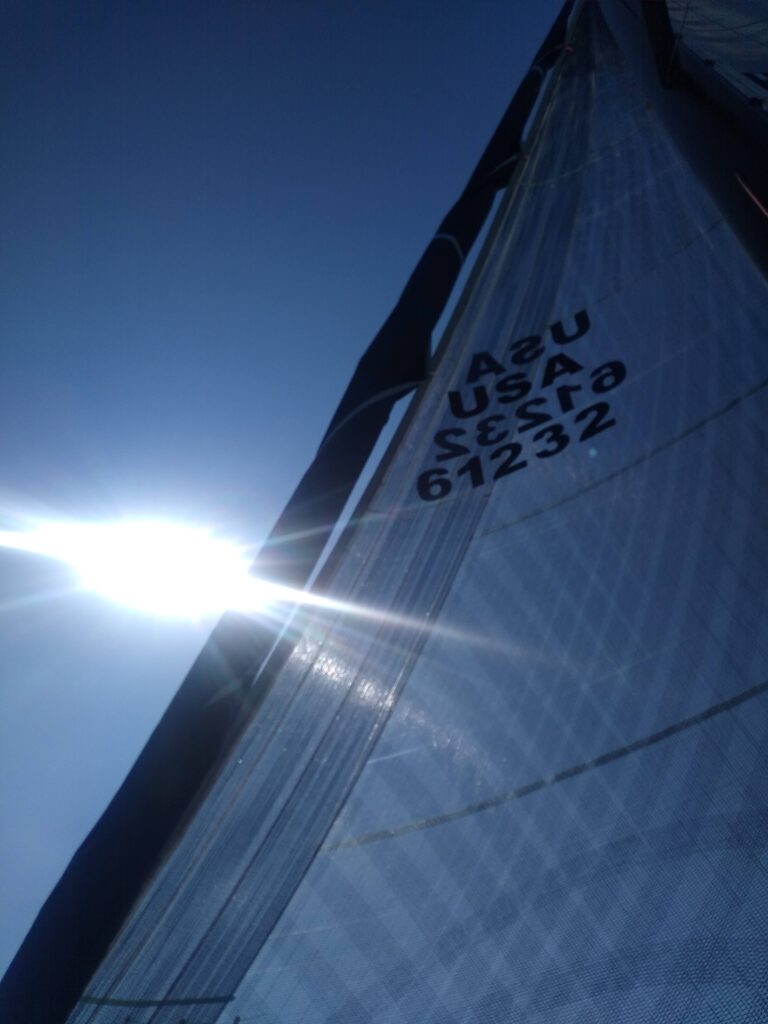
In custom membrane sails, we add more vertical fibers in the luff, often in the form of a luff lens panel that runs the entire length of the sail. This extra structure reduces the halyard or cable tension needed to achieve the same headstay or luff sag. Less sag means a flatter sail with a cleaner entry and more efficient shape.
For Code Zeros, especially those used high and fast near upwind angles, reducing sag produces major gains. A tighter luff creates a sharper entry and less distortion as the breeze increases. It works much like tightening the backstay to stabilize the headstay. In racing applications where rules enforce minimum midgirths, a structured luff offers another advantage. Pulling the draft forward reduces the effective midgirth of the sail without changing the measured values, allowing designers to create faster shapes that still comply with the rules.
Structured luffs also help when combined with positive luff roach. By pushing more material toward the leading edge, we remove the loose cloth near the leech that tends to flap, hook, or distort. The result is a more stable sail with a cleaner exit.
All of these benefits add up to sails with better entry angles, less sag, and a smoother, more controlled leech. The airflow is more efficient, drag decreases, heel reduces, and more of the wind’s energy is converted into forward drive. Designers love working with this technology because it unlocks shapes that were not previously possible.
These advantages translated so well in Code Zeros that structured luff technology quickly migrated into jibs and genoas. Modern headsails are far stiffer than older sails, which makes them less responsive to halyard or cunningham tension. Adding structure to the luff allows the sail to react more dynamically to trim changes, expanding the usable range. This is especially effective for boats that struggle to generate headstay tension, such as older straight spreader rigs.
There are several effective methods for building a structured luff.
The original and most common technique is the luff lens, a vertically oriented elliptical panel built into the leading edge. In a custom membrane such as EM2 E Tech or Element composite sails, this panel is made from carbon and extremely strong. In triradial sails like EVO 04 and EVO 06, the lens is built from a heavier fabric cut to match the load path.
A second method, often used on boats under forty five feet, divides the structure between a narrow vertical panel and additional reinforcement inside the membrane. This is simpler, lighter, and effective without the full complexity of a larger lens.
The final method builds the structured luff entirely into the membrane. Additional carbon runs are placed straight up the luff and just aft of it, and the positive luff roach is formed directly in the sail design. This is the most cost effective option and the preferred approach for jibs, genoas, and smaller Code Zeros.
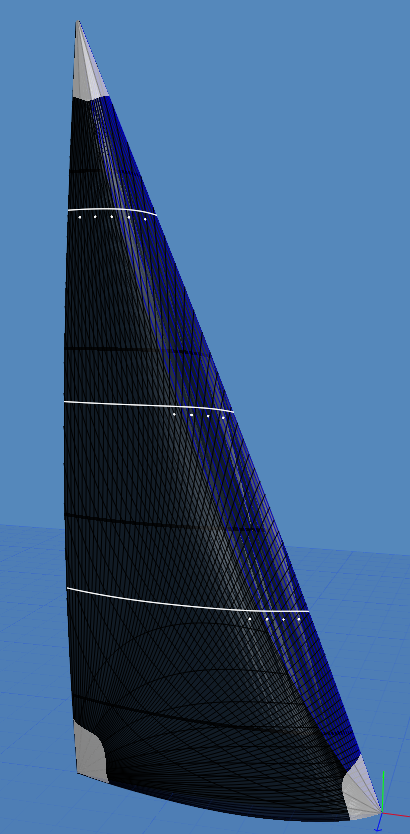
Structured luff sails are rapidly becoming the future for Code Zeros and headsails. The technology has already gone through multiple generations and continues to evolve, building on lessons learned from the first cableless sails. Regardless of the specific construction method, structured luffs deliver meaningful improvements in shape, efficiency, and handling across a wide range of conditions. If you want to learn more about how a structured luff sail can improve your boat, our team would be happy to help.
Summary
Structured luff technology shifts more load into the sail itself and away from the cable or forestay. This reduces sag, improves entry shape, creates a cleaner exit, and increases efficiency. Originally developed for Code Zeros, the concept now enhances headsails as well. Structured luffs provide better performance, greater trim range, and more control across the wind range while improving furling and extending sail life.
For more information
If you are interested in adding a structured luff sail to your boat or want to understand how it could improve your sail plan, we would be happy to help.
Request a Quote
Quote
Learn More About Evolution Sails Chicago
Evolution Sails Chicago
Explore Our Learning Center
Learning Center
See Our J Boats Midwest Dealership
J Boats Midwest