

If there’s one decision in the sail buying process that has the greatest impact on how your sails perform and how long they last, it’s materials. Get this right and you’ll have sails that hold their shape, handle the conditions you sail in, and serve you well for many thousands of miles. Get it wrong and you may find yourself dealing with stretched, distorted sails long before their time. This article walks you through the main options so you can have an informed conversation with your sailmaker about what makes sense for your boat and your plans.
The Two Big Categories: Woven vs Laminated
All sailcloth falls into one of two broad categories: woven fabrics and laminates. Understanding the difference between them is the foundation for everything else.
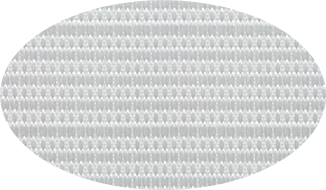
Woven sailcloth is made exactly the way it sounds, individual fibers woven together on a loom into a pliable sheet of fabric. The cloth is then treated with heat, pressure, and resin coatings to stabilize the weave and give it the characteristics needed for a sail. The most common woven sailcloth by far is Dacron, a polyester fabric that has been the standard for cruising sails for decades. Woven sails are inherently durable because the fabric is one continuous piece with no layers to separate or delaminate, and they tend to hold up well to the general wear and tear of sailing. Not all Dacrons are created equal though. Higher quality Dacrons use better fibers and more refined finishing processes, and the difference between a budget Dacron and a premium one is meaningful over the long run.
Beyond standard Dacron, there are woven fabrics that incorporate high-strength fibers like Dyneema. Dimension Polyant’s Hydranet and Contender’s Pro Hybrid are the most widely used examples for offshore cruising. These fabrics blend the toughness and easy handling of a woven sail with significantly better stretch resistance, giving you improved shape retention without the complexity of a full laminate.


Laminated sailcloth is constructed from multiple layers bonded together rather than woven. A typical laminate has load-bearing fibers at its core, a mylar film for structural stability, and outer skins for protection. The load-bearing fibers can be polyester, Dyneema, or high-performance aramid fibers like Kevlar, Technora, or Twaron, each offering different performance characteristics. Most cruising laminates have taffeta skins, which are woven polyester layers bonded to the outside for added durability and UV protection. Common cruising laminate materials include Contender CDX and Dimension Polyant DCX, both of which use polyester load fibers with double taffeta skins, offering a good balance of shape retention, durability, and affordability for sailors ready to step up from Dacron.
Laminates used to have a poor reputation, and honestly, it was earned. Early laminated sails had a tendency to delaminate, with the layers separating and the sail falling apart well before its time. The sailmakers of that era were working with new technology and didn’t yet have the knowledge or processes to build laminates that stayed together reliably under real-world sailing conditions. Years of experience and significant improvements in laminating techniques have changed that picture entirely. A modern laminate, built by a competent loft, is not something you need to worry about coming apart. It’s also a better performing sail in most respects: less stretch means the sail holds its shape longer, causes less heel, and produces more forward drive. And because laminates can be built lighter than equivalent woven sails, they’re easier to handle on deck and put less load on the rig.
How Sails Are Cut: Crosscut and Triradial
Crosscut and triradial refer to how a sail is constructed from panels of cloth, and both can be applied to woven or laminated materials.

Crosscut construction arranges panels horizontally across the sail. It’s the traditional method, economical and straightforward to build, and most entry-level cruising sails are crosscut Dacron. In a crosscut sail, the strongest fibers in the cloth run across the short width of each panel, which works well but doesn’t always align perfectly with the actual load paths in the sail. Over time and miles, this can lead to stretch and distortion, particularly on boats with higher loads.

Triradial construction arranges panels so they radiate outward from the corners of the sail, where the loads are highest. This better aligns the strength of the cloth with the actual forces the sail experiences, which means better shape retention over more miles. Triradial sails cost more to build due to higher material wastage and more complex construction, but the investment pays off in a sail that holds its shape longer and performs better across a wider range of conditions. Most laminated cruising sails are built triradial, since the construction method takes full advantage of what a laminate can do.
Membrane Sails

Membrane sails take the laminate concept further, with load-bearing fibers laid precisely along the actual load paths of that specific sail design rather than relying on the fiber orientation of a pre-made cloth. The result is the most efficient, lightest, and best shape-retaining construction available, with fibers exactly where they need to be and none where they aren’t.
Evolution Sails’ EM2 Composite is our membrane product, built at a state-of-the-art facility in Auckland, New Zealand. The internal fiber matrix is custom-designed for each sail, using high-performance fibers like Technora, Twaron, carbon, or Vectran depending on the application. The exterior is finished with taffeta skins for cruising applications, protecting the internal structure from UV and chafe. Reef points, batten pockets, and reinforcements are integrated internally, which reduces weight and increases durability compared to externally sewn attachments. For cruising applications the Expedition skin is the right choice, purpose-built for the sustained loads and environmental exposure of serious offshore sailing.

Matching Materials to Your Sailing
With all of that as background, here’s how the material choices map to the three sailor categories from Article 2.
Coastal sailors, those day sailing close to home with the flexibility to pick their weather, have the most options and the most flexibility in what they buy. The bread and butter choice is Dacron, and there are good options at every price point. Challenge Newport AP is a medium-finish, versatile Dacron that handles easily, furls cleanly, and delivers solid service over many seasons of regular sailing. It’s a proven workhorse for exactly this kind of use. For sailors who want a step up in shape retention, Contender Warptech is a high-tenacity polyester that stretches significantly less than standard Dacron, keeping the sail flatter and better performing over more miles without a big jump in cost. For coastal sailors who want laminate performance, Dimension Polyant DCX is a triradial laminate with double taffeta skins that offers noticeably better shape retention and is a great option for sailors who cover real miles or want crisper performance across the wind range.
Offshore sailors, making longer passages and committed to conditions they can’t always avoid, benefit from materials with better stretch resistance and durability. Contender Warptech remains a strong option, particularly in two-ply form for larger boats, doubling structural strength and shape life. Moving up into laminates, Dimension Polyant DCX is well suited to high-load offshore cruisers that see varied conditions. For offshore sailors who want the best combination of toughness and shape retention in a woven construction, Hydranet Radial is the benchmark: polyester reinforced with Dyneema load fibers, capable of handling years of UV, flogging, and heavy air without losing structural integrity. Many circumnavigators choose Hydranet specifically because they can trust it anywhere in the world.
Bluewater sailors need sails that can handle everything: constant UV, salt, chafe, thousands of miles of sustained loads, and conditions they have no choice but to sail through. Hydranet Radial and Contender Pro Hybrid are popular woven choices at this level, both offering Dyneema reinforcement and proven long-term durability. For boats where the best possible shape life and structural integrity are the priority, the EM2 Expedition membrane is the top of the range option. It’s engineered from the fiber layout up for serious offshore miles, with taffeta skins, internal reinforcements, and customizable fiber options to match the specific demands of the boat and voyage. For sailors planning to log tens of thousands of miles, it offers unmatched shape life and weight savings while maintaining a conservative, repairable exterior.
Cruiser-racers are another group that particularly benefits from the EM2 Expedition. It sails with the precision and low stretch of a race sail, giving you that sharp, responsive feel on the water, but it’s built tough enough to leave on the boat and use day after day without worrying about wearing it out. You get the performance without the babying, which makes it an ideal choice for sailors who want to sail fast and cruise hard without running two separate inventories.
A Note on Value
It’s tempting to look at material costs and gravitate toward the most economical option, and for some sailors that genuinely is the right call. But it’s worth thinking in terms of miles and use rather than upfront price alone. A sail that holds its shape over tens of thousands of miles and requires minimal maintenance often works out to be better value than a cheaper sail that bags out and needs replacing after a few hard seasons. Your sailmaker can help you think through the right tradeoff honestly, based on how much sailing you actually do and what you’re trying to get out of your investment.
For deeper reading on each material type, check out our guides on woven Dacron, paneled laminates, and EM2 Composite sails in the Learning Center.
In Article 6, we’ll talk about pulling all of this together into a decision, including how to think about budget and making sure your sails match your plans.