

The story of a well prepared boat fumbling it at the two yard line at this year’s Bayview Mackinac Race, plus a little on how ORC actually works.
I’ve written before about the JPK 10.80 Smokeshow. It’s a very cool French designed and built short handed boat, and the owner, Jake, agreed to let us meddle with it. The boat responded by crushing it. We won the first Bayview Mac by over an hour and a half, then had an infamous Detroit Helly Hansen Regatta where we not only won the distance event, we were first to finish. On a 36 footer. Against 40 and 50 footers. People were not thrilled.
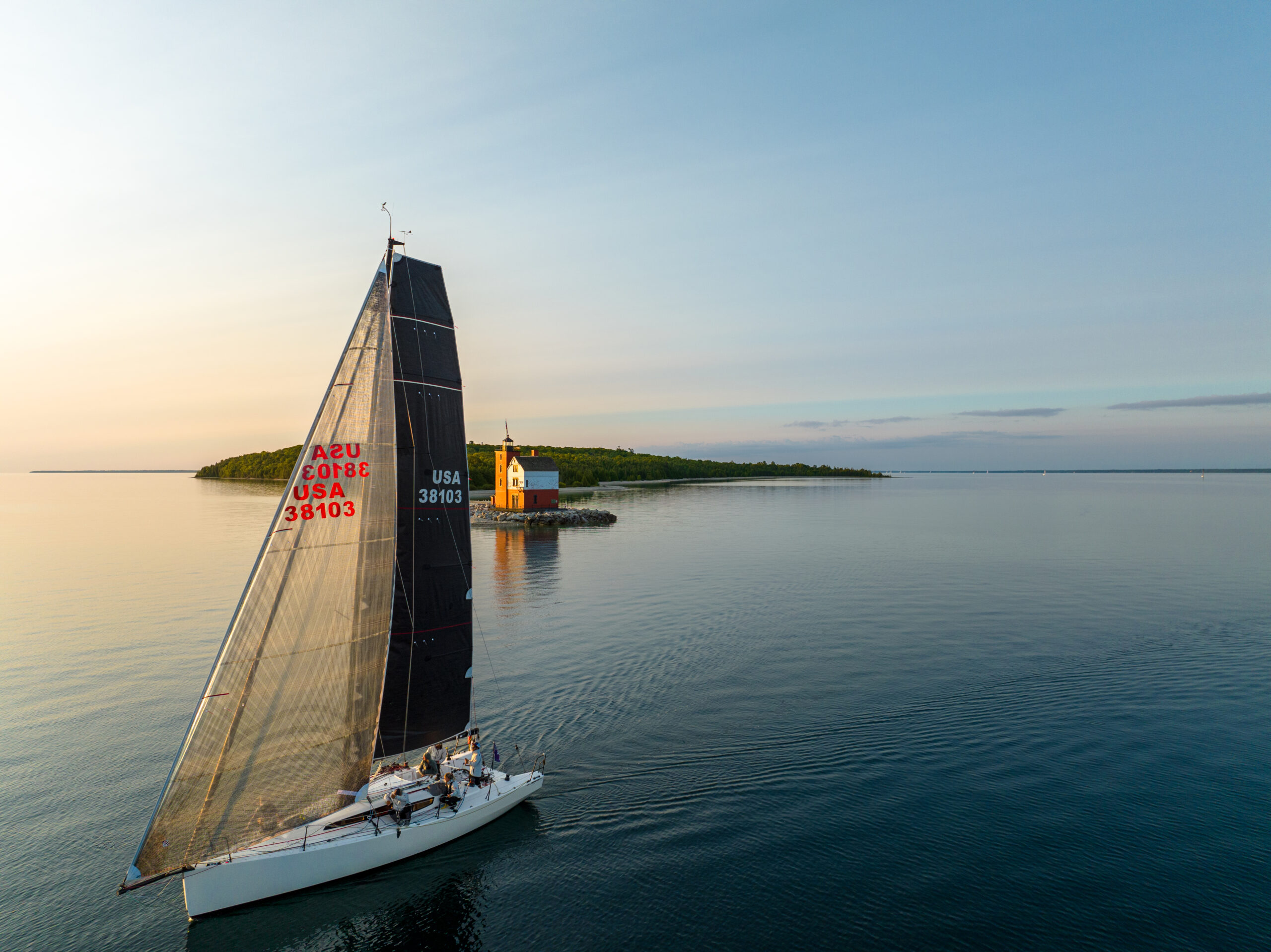
Fast forward to this year and we ran into a strange issue. The wind mix for the Bayview Mac, our biggest target, changed to one where 68% of the rating was based on wind under 8 knots.
A quick aside on how ORC works
There is no single rating for an ORC boat. Instead, the polars on the first page of the certificate get turned into a rating for every individual wind strength and direction.
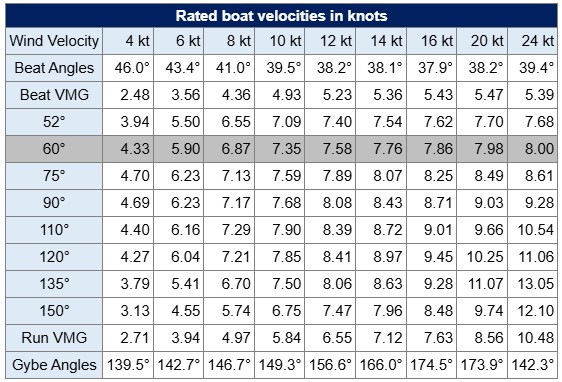
If you ran an entire race in 12 knots at a 90 degree wind angle, for example, you would rate 445.5 seconds per mile in time on distance.
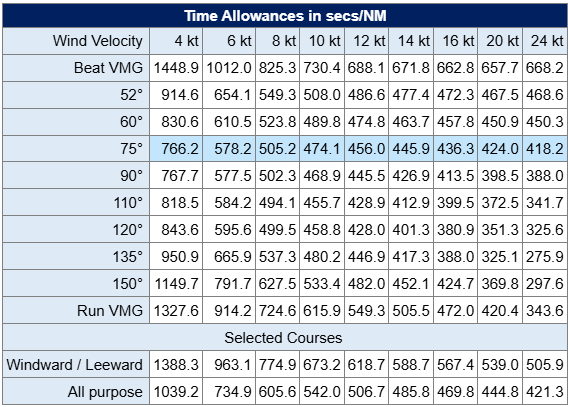
ORC then works with each country and each race to come up with rating mixes: weighted averages of the wind strengths and angles expected for a given event. Some of these are general (all purpose medium wind, windward/leeward heavy, predominantly downwind light, and so on) and some are race specific, like the ones for the Chicago and Bayview Macs.
When we ran the numbers on the new light wind mix, two things jumped out. First, the big squaretop main takes a serious penalty in light air. Second, the mix was a couple of knots lighter than the wind range we actually expected to see. So we were paying for sail area in conditions we probably wouldn’t sail in, and getting no credit for it in the conditions we would.
The reconfiguration
So we did a little reconfiguring. Out went the squaretop, in came the pinhead main Jake uses when he sails the boat single handed, and we went back to a single fixed backstay.
That left us worried about light air. The 10.80 has a lot of wetted surface and two rudders. It’s a powerful boat in big breeze and a very draggy one when the wind is light. The answer was a new J0 with a smaller mid girth, which let it point higher and serve as our light air upwind sail. Small rating penalty, but we were still 40 minutes ahead on the average race, and it plugged a real hole in the inventory.
Then the forecast came out and we felt like geniuses. A squall line was due shortly after the start, followed by boat breaking upwind conditions in the high 20s and low 30s for twelve plus hours. That squaretop we’d have been paying a big penalty for would have spent most of the race reefed, and a race that averaged solidly into double digits would have been rated mostly at 0 to 8 knots. This is the ORC equivalent of finding money in a jacket pocket.
The race
We had a tough section. The J/120s came within a few boats of being their own one design fleet, and several of them were well sailed by crews that practice together every week. We, on the other hand, had the full crew together for the first time since last year’s Mac. It was the second time the boat had raced all year.
The race started with sunny skies, a nice westerly and ominous storm clouds rolling over Michigan. The first leg was an awesome J0 blast reach, which this boat absolutely loves. We dodged the first squall line (“go faster, it’s catching us”) which lined us up perfectly to get nailed by the second one. J0 down, J3 up, rain coming down sideways and wind way up. The storm passed quickly and we were off again.
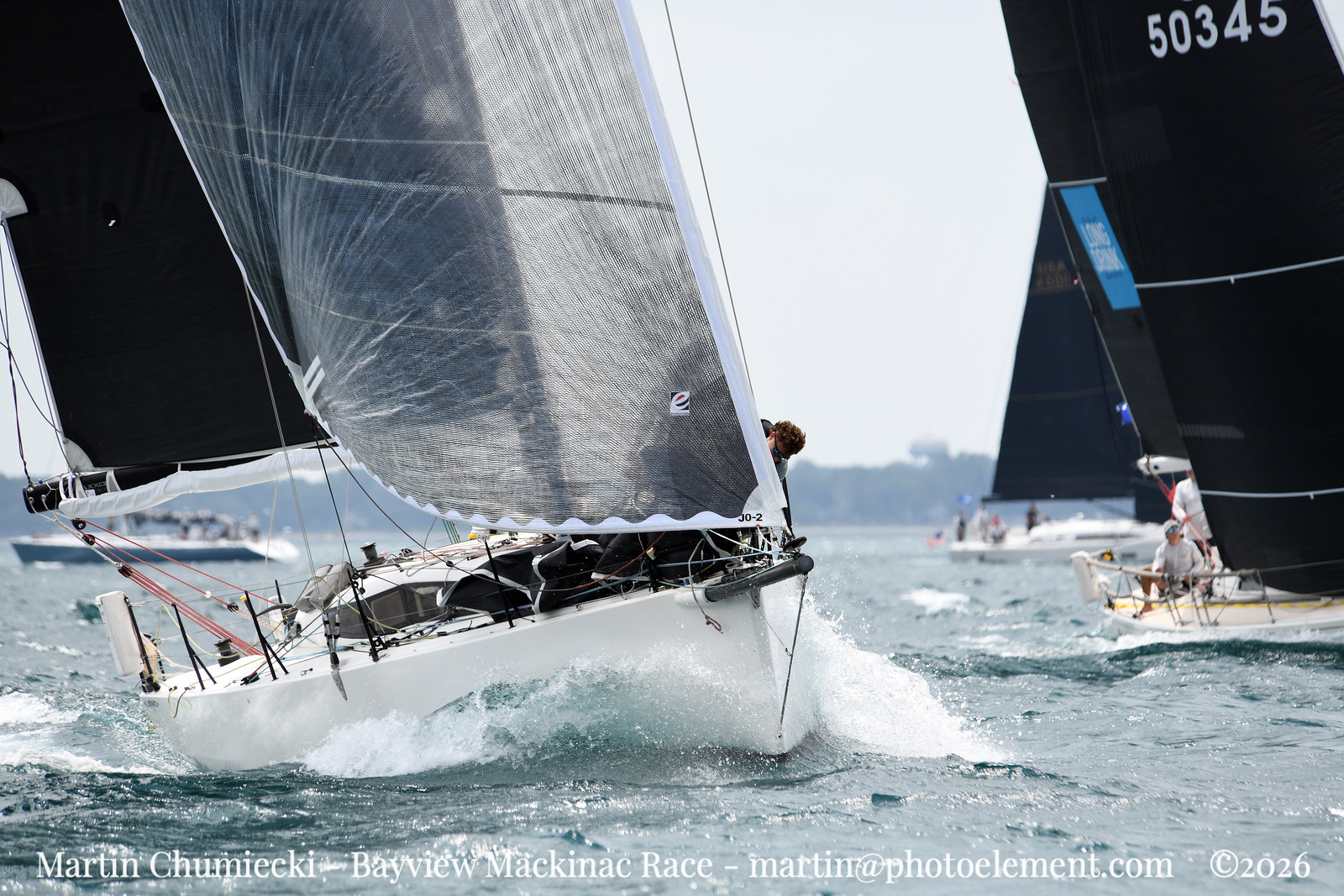
After the squalls cleared, the breeze shifted and started to build. Back into the J3, then one reef, then two. The wind and waves kept coming and we settled in for an evening of 10 foot waves and big breeze.
This is where the trouble started, though we didn’t know it yet. A few of us spent too long down below getting geared up, and for the first time in ten years I got seasick, along with a couple of others. We had a strong crew and a boat that was set up beautifully for big breeze upwind, so it didn’t hurt us in the moment. What it did was start a cycle of fatigue that would collect its debt later.
Twelve hours of beating our brains out later, we tacked over early Sunday morning to point at the Cove Island buoy on starboard. The conditions had taken their toll on the fleet. Almost half had dropped out with broken boats, broken sails, or broken people. The breeze calmed through Sunday and eventually died to almost nothing as we worked our way up to the buoy. We rounded in good shape, just behind the J/120s that owed us over an hour.
The Ducks (where it all went wrong)
From Cove we were beating again in 8 to 10 knots, trying to get up and around the Duck Islands. If you’re ever sailing past them, slow down and pay your respects. We knew we needed a couple of tacks to get off the north shore of the lake and clear the islands.
Mistake one: I got an itchy trigger finger and tacked out early. We only went 15 minutes, but we sailed into slightly less breeze and let the other boats get away from us.
Mistake two: there was a lot of shear between the wind aloft and the wind at the water, and we could not get the boat up to polars. We started troubleshooting boat speed when what we really needed was to change to the J0. The wind we were actually sailing in at water level was squarely in that sail’s range. We were too focused on the instruments, and I broke one of the cardinal rules: trust your senses before the numbers.
Mistake three, and the one underneath the other two: everyone was tired, and the two of us doing the navigating were the most tired of all. I should have handed off the boat speed question, and the helm, to someone else. We had plenty of capable sailors on board. Instead we stayed locked in on a speed problem, sailed slow, and drove right into a giant hole. Our competition tacked out and eked their way around it. We drew a giant letter A on the tracker and watched them sail away.
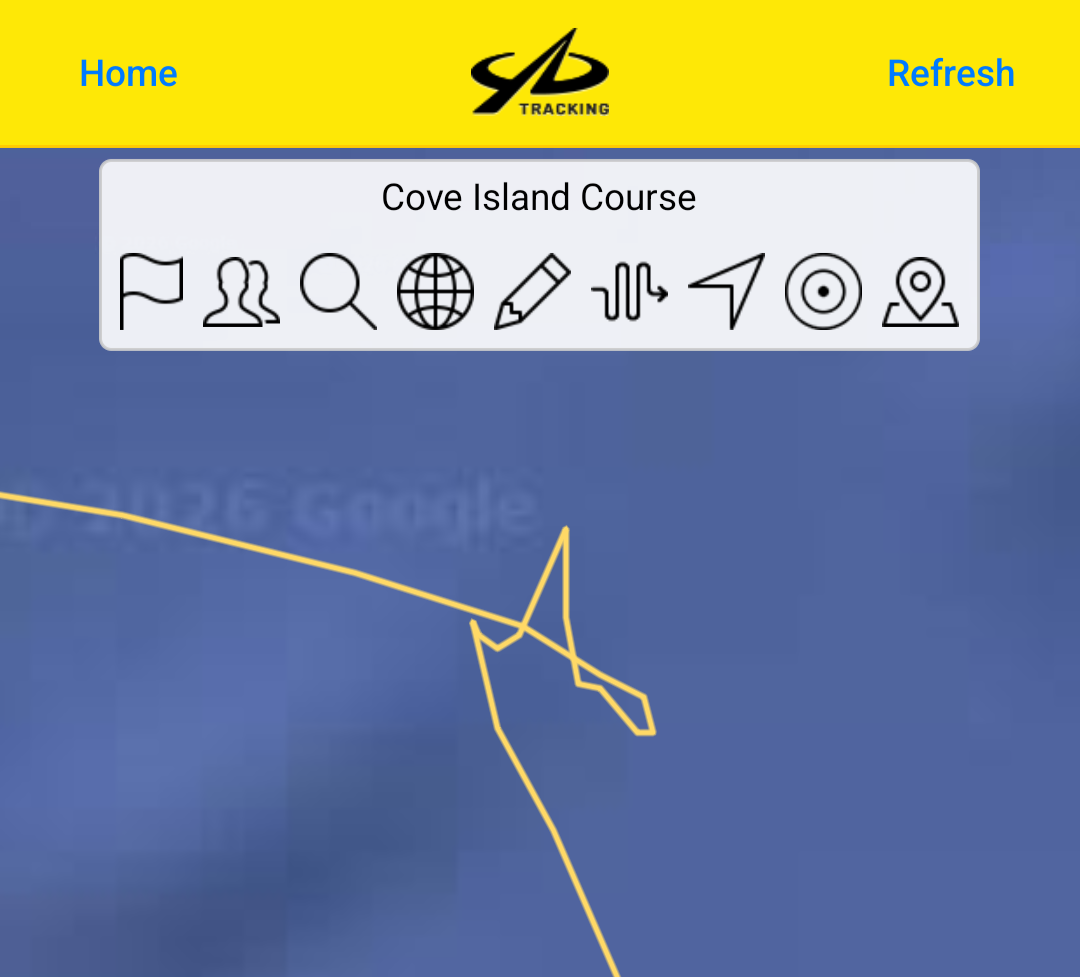
When we finally got moving again we got the J0 up and had a tight reach around the edge of the Ducks. We lost more ground there, since the competition had a better angle. We finally stopped the bleeding when we cleared the island, now in 4th.
The rest of the race was a straightforward reach across, which eventually tightened up until it was almost upwind. I’m proud of this team for not giving up. We pushed the boat through the night and into the morning and ground back a position to get on the podium, just six minutes out of second. We had an hour lead when we hit the hole.
So here’s what we fucked up
- Our navigators were cooked. It was a tough race to that point, but we needed to do a better job of staying sharp, and that meant managing rest earlier instead of finding out we were out of gas at the exact moment we needed it.
- Just cover. I cannot tell you how many times I have said this to other people. We were handily beating boats that owed us time. All we had to do was follow in their wake. Instead we went looking for a better idea, and found one.
- Know where the decision points are. For the first half of the race I made a cheat sheet with the major decision points and the shifts in the forecast. I never did the same work on the sail in from Cove. The leg had real complications, a pinch point at the Ducks, shear, and dying breeze, and I just didn’t identify them ahead of time. So when we got there we weren’t on the lookout the way we should have been, and we treated a critical decision like routine sailing.
- Trust the team and your senses. We were in the wrong sail because the instruments were lying to us, and I had people on board who could have sorted out a small boat speed problem while I watched the navigation. Nobody on a sailboat needs to be the hero, least of all the tired guy.
The takeaway
The frustrating part is that the hard work was right. The rating analysis was right, the sail changes were right, the forecast cooperated, and the boat and crew handled twelve hours of brutal upwind sailing that sent half the fleet home. We did the difficult stuff well and then gave it away in light air, with an hour in hand, on a leg I hadn’t done my homework on.
That’s the nature of distance racing. Preparation buys you a lead. It doesn’t protect it. The race is won by whoever makes the fewest bad decisions 30 hours in, when nobody has slept and the adrenaline from the big breeze is long gone, and on this one that wasn’t us.
If there’s a lesson worth stealing, it’s this: plan for your own fatigue the same way you plan for the weather. Know when you’ll be at your worst, and have someone fresh ready to take the wheel, the sail call, or the navigation before you need them to. Sharp people make good decisions. Tired people make confident ones.
We’ll be back. The boat is fast, the setup was right, and the lessons were expensive enough that I intend to remember them. Third place with a story beats second place with nothing to write about. That’s what I’m telling myself, anyway.
Shameless plug
At 180 Sails we specialize in ORC optimization. We pull your certificate, model your polars against the wind mixes for the races you actually care about, and build a sail inventory that rates well where it counts.
Get in touch at 180sails.com. We’ll get you to the Ducks with an hour in hand. What you do with it is up to you.